If you buy through Sunbeam & Sisal links, we may earn a commission at no extra cost to you. How Sunbeam & Sisal affiliate links work
When a cat digs its claws into the side of an armchair or the edge of a rug, it is not acting out of malice or boredom. Scratching is an essential, instinctual feline behavior. As the Indoor Pet Initiative at The Ohio State University explains, cats scratch to stretch their muscles, shed the outer cuticle of their claws, and mark territory using scent glands located in the pads of their paws. Even declawed cats retain this powerful natural drive.
Preventing shredded upholstery comes down to providing an appealing, well-placed alternative that satisfies those same physical drives. Below, we break down what makes an upright scratcher effective, analyze two compact sisal options from marketplace listings, and detail the placement strategies supported by animal welfare specialists to redirect clawing away from your furniture.
The Three Non-Negotiable Scratching Post Criteria
- Full-extension height: Cats need to reach upward and extend their entire spine and shoulder girdle. A post that is too short forces an unnatural crouch.
- Rock-solid stability: If a post wobbles, tips, or slides under body weight, it may discourage use; observe your individual cat and verify the product’s stability.
- Shreddable, fibrous texture: Coarse woven sisal fabric or tightly wrapped sisal rope provides resistance that catches claws and sheds claw sheaths cleanly.
Matching Post Design to Scratching Style
Every cat approaches claw care with distinct biomechanical preferences. Observing how and where your cat targets household items reveals what kind of scratcher will succeed:
- Vertical reachers: If your cat attacks sofa arms, chair legs, or door moldings, they require an upright post. They prioritize reaching up high and pulling downward with body weight.
- Horizontal scratchers: Cats that target area rugs, doormats, or stair runners prefer working on flat ground, using their hind legs for leverage.
- Incline scratchers: An angled ramp provides a middle ground, offering diagonal resistance and ergonomic stretching without taking up significant vertical wall space.
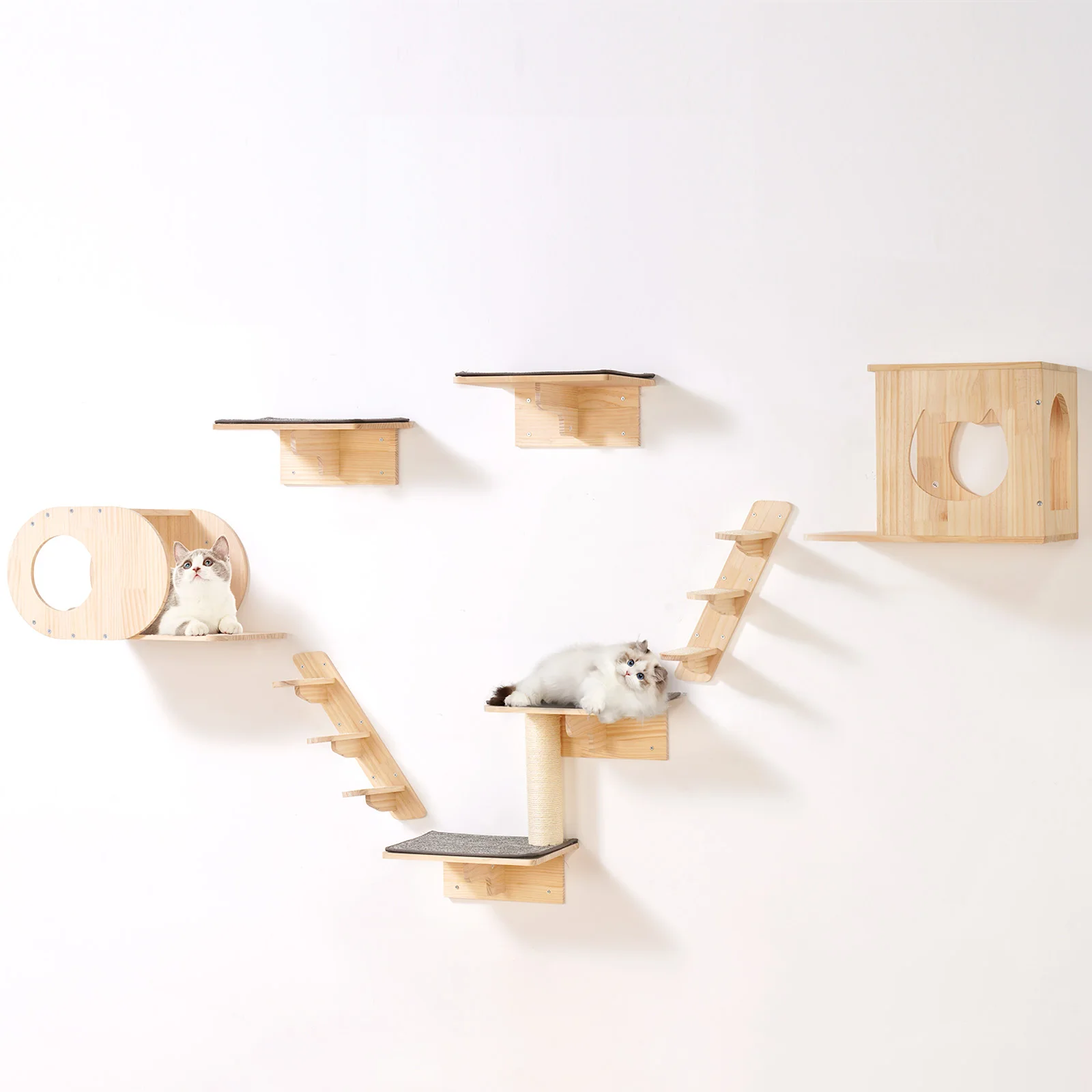
If you have already added climbing features like cat wall shelves, vertical posts can also serve as ground-level launch pads along their daily indoor patrol paths.
A Standing Post Listing and a Replacement-Pad Warning
Marketplace listings offer budget-friendly entry points for redirection, but buyers must evaluate listing claims against practical behavioral needs. The following two products reflect listing information captured on October 12, 2026; review exact specifications, dimensions, and package contents with the seller before purchasing.
Option 1: Upright Sofa-Safe Sisal Post
The Sturdy Sisal Cat Scratching Post (sold by Stone's Store, reference price $3.40 USD) is presented as a vertical scratching column wrapped in woven sisal matting on a flat, rounded base. Its advertised purpose is furniture defense and healthy nail maintenance, positioned directly adjacent to sofa corners.
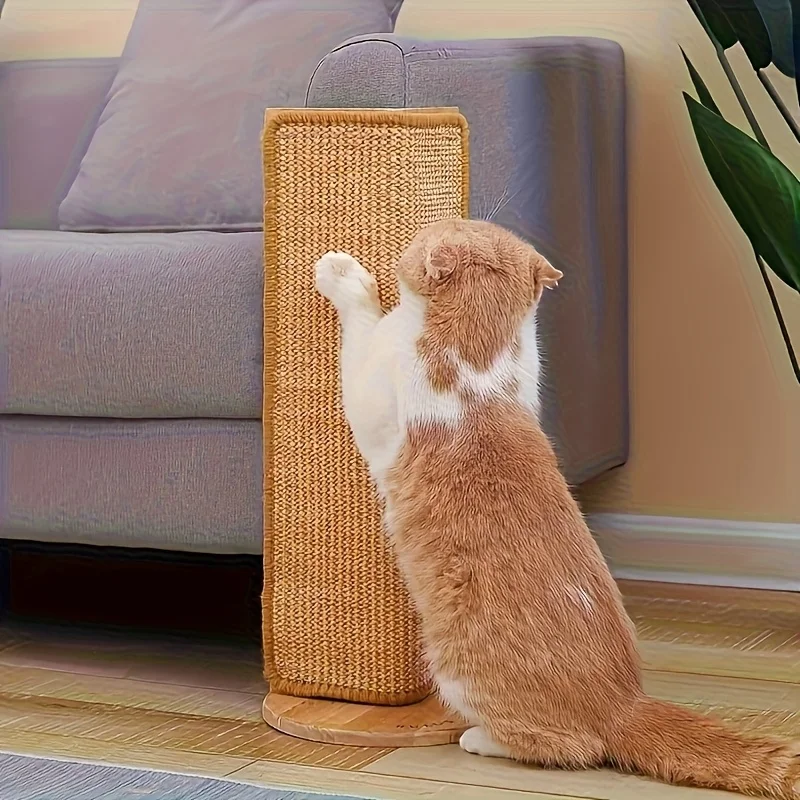
Fit to verify: compare the stated footprint with the space beside your furniture and observe which surface your cat prefers. The listing does not independently establish durability or how every cat will respond.
Limitations to verify: The listing does not supply exact column height, base diameter, or total product weight. An adult cat pulling down on a lightweight post can easily tip it over. Before purchasing, verify the height to ensure your cat can reach up fully, and consider whether the base will require weighting or anchoring against floor movement.
Accessory/Variant Warning: Replacement Pad Listing
The second listing’s image states that only a replacement pad is included, not the pictured frame or board. Treat this as an accessory or variant-warning example, not a verified complete scratching post. Confirm the selected option and its contents before ordering; the displayed listing price does not establish the price of a complete frame.
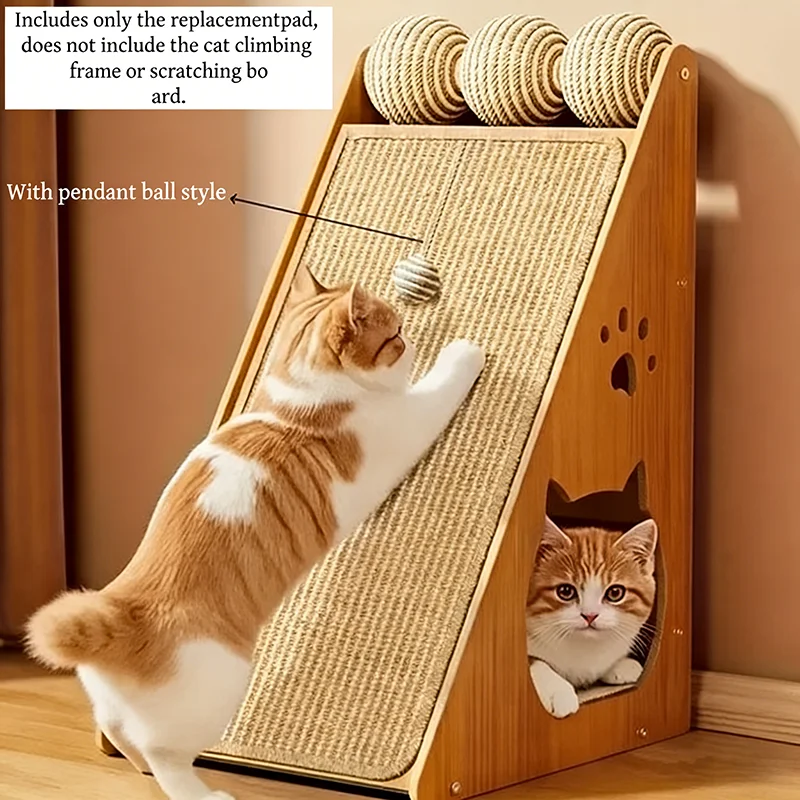
Listing Verification: Complete Post or Replacement Part?
Because budget marketplace listings often omit technical measurements, use this reference checklist to compare your pet's needs against the seller's options:
| Check | Upright post listing | Replacement-pad warning |
|---|---|---|
| Complete item evidence | The title and picture suggest an upright post; confirm the selected variant and contents. | The image states replacement-pad-only. Do not count the pictured frame as included. |
| Measurements | Height, footprint and total weight remain unverified. | Confirm the pad dimensions and compatibility with an existing frame. |
| Price interpretation | A listing reference price is not proof of the complete selected package. | Do not compare the pad price with the price of a complete standing unit. |
Placement and Redirection: How to Protect Your Furniture
Buying a sturdy post is only half the battle; location dictates whether a cat will actually use it. Feline behavior experts emphasize that cats scratch in prominent, visible spots to define their territory.
Where to Position Your Posts
According to the American Humane Society, cats prefer scratching in high-traffic, open spaces rather than hidden utility corners. Best practices include:
- Right beside the sofa corner: Place the new post immediately in front of the damaged furniture so the approved texture blocks access to the fabric.
- Near sleeping areas: Cats routinely stretch and groom their claws immediately upon waking from naps.
- Along core transit routes: Position scratchers near room entryways, corridors, or pathways leading to food and litter stations. Multi-cat households need multiple scratching stations to prevent territorial bottlenecks.
Retraining Without Stress
If your cat continues scratching upholstered furniture, avoid punishment, which simply increases feline anxiety. Instead, follow a two-step redirection plan:
- Make the furniture unappealing: Temporarily apply double-sided sticky tape or smooth plastic sheeting over the damaged fabric. Cats dislike sticky or slick textures on their paw pads and will seek alternatives.
- Encourage interest without forcing use: Rub a small pinch of organic catnip onto the sisal surface, or engage your cat with a wand toy right next to the post so their claws naturally make contact with the sisal weave.
- Relocate gradually: Once your cat consistently uses the post, you can move it to a more convenient spot. The Indoor Pet Initiative advises shifting it no more than three inches per day (American Humane recommends no more than one foot per day) to maintain the cat's habit.
Routine Claw Care
Claw care does not replace appropriate scratching opportunities. Ask a veterinarian or qualified groomer about care suited to your cat if handling is difficult or you are unsure; do not assume one trimming schedule fits every animal.